


















.svg.png?height=48&name=Zoho_CRM_(application).svg.png)






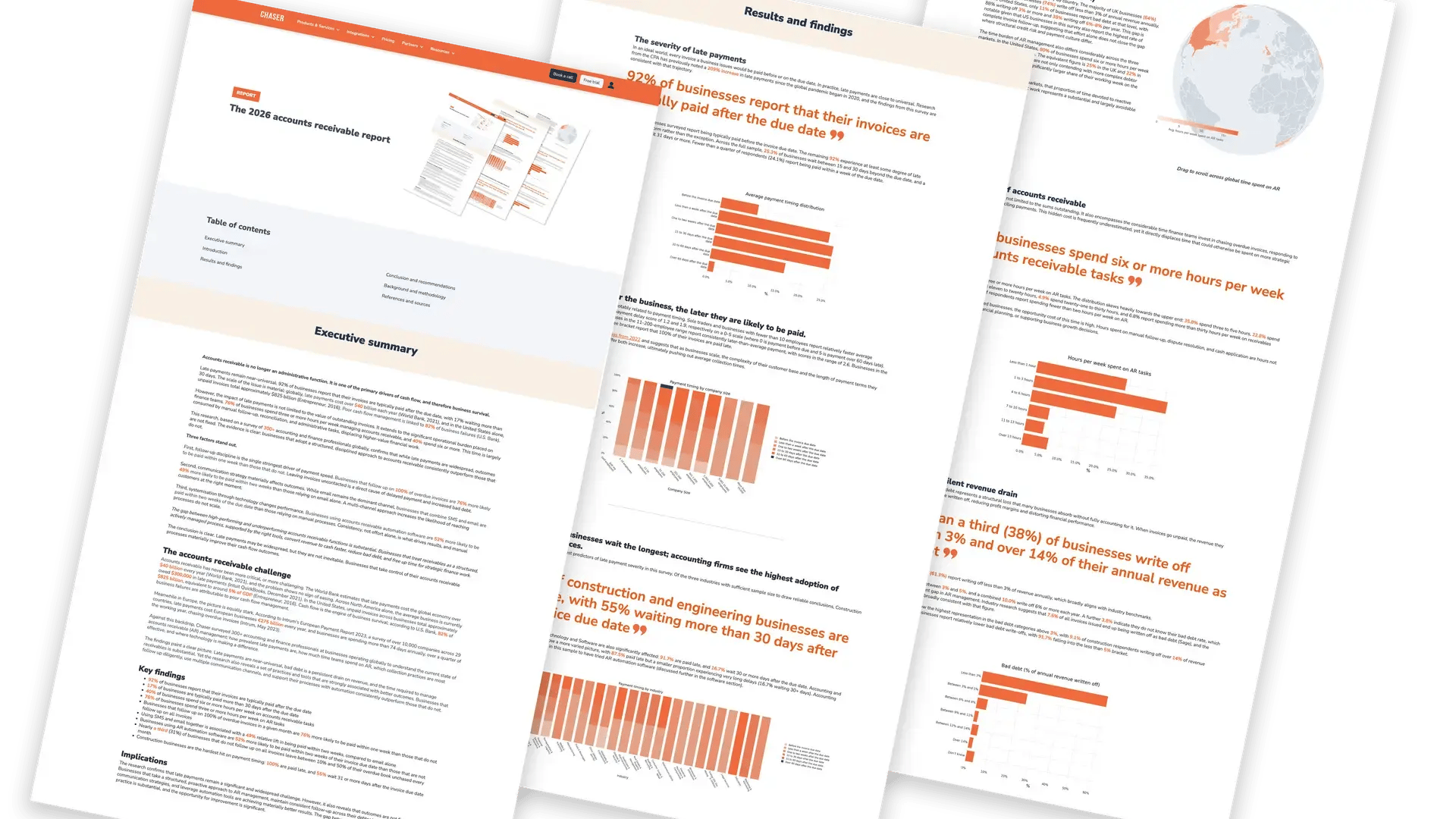

A payment reminder email is a short, polite message that prompts a customer to pay an invoice on or after its due date. The most effective approach is a timed sequence: a friendly heads-up before the due date, a clear nudge on the day, then firmer follow-ups at 7, 14, 30 and 60 days overdue. Send the right message at the right time and you get paid faster without straining the relationship.
The bottom line
Late payment costs the UK economy around £11 billion GBP a year and closes roughly 38 businesses a day, according to the Department for Business and Trade. A consistent reminder sequence is the single cheapest way to protect your cash flow. This guide gives you the timing, the tone, and eight copy-paste templates for every stage, from gentle first reminder to final notice.
If you run credit control or manage a finance team, you already know the problem. The work is done, the invoice is sent, and then nothing. Chasing payment by email feels awkward, takes hours, and is easy to let slide when you are busy. Yet over 1.5 million UK businesses, around 28%, are hit by late payment every year. This guide turns invoice chasing into a calm, repeatable system you can run on autopilot.
What is a payment reminder email?
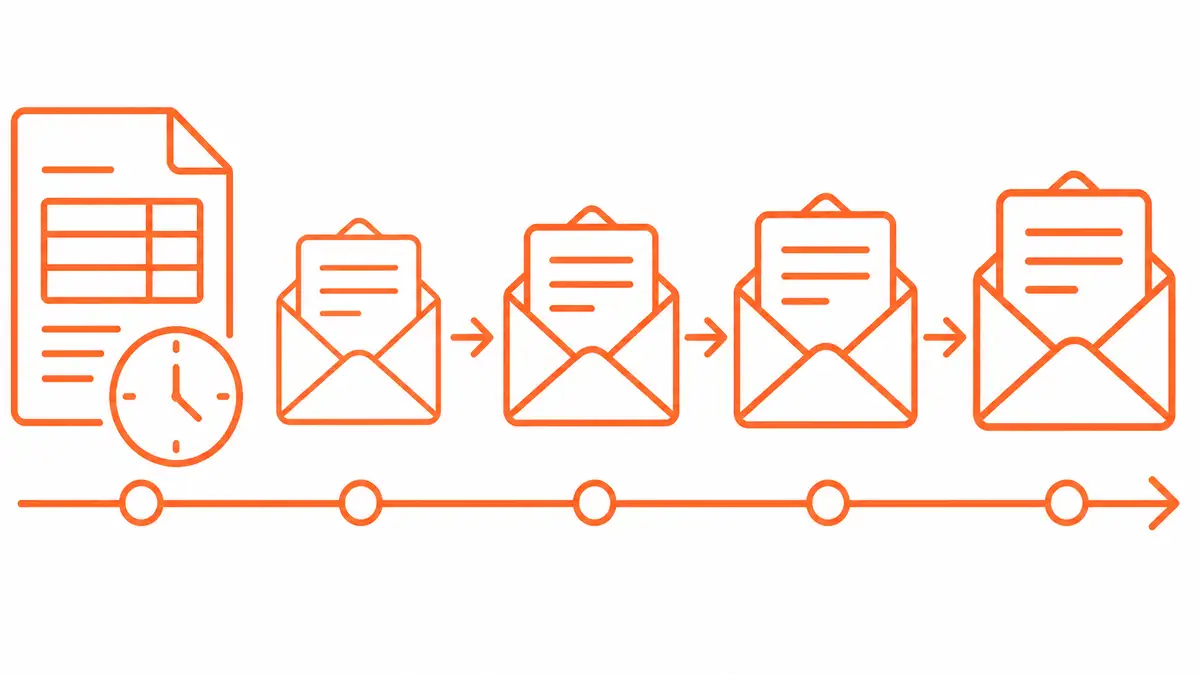
A payment reminder email is a written message that asks a customer to pay an outstanding invoice. It can go out before the due date as a courtesy, on the due date as a prompt, or after the due date to chase an overdue balance. A good payment reminder states the invoice number, the amount owed, and the original due date in plain language, and it makes paying as easy as possible.
Reminders are not the same as a demand. Most late payment is not deliberate. Invoices get buried in busy inboxes, sit in an approval queue, or wait on a payment run. A friendly payment reminder simply keeps your invoice top of mind. Sending one is professional, not pushy, and it is the first and most important step in any accounts receivable process.
Why send a payment reminder email at all?
You send payment reminder emails because your customers manage their cash flow the same way you do. Their accounts payable team will pay the invoices that are chased and visible first, and quietly defer the ones that are not. A timely reminder moves your invoice up that queue. It also protects you: the longer an invoice goes unpaid, the harder it becomes to collect.
14 hrs
per week chasing
Time finance teams lose to manual receivables admin
~8%
of revenue
Written off to bad debt each year on average
64%
of finance leaders
Lack confidence in their cash flow data
Sources: Intuit, Sage, CFO.com.
Those hours add up. Chasing late payers by hand is one of the biggest drains on a finance team's week, and the cash that slips through is real. This is exactly the work that automated credit control software is built to take off your plate, so your team can focus on the customers and decisions that matter.
When should you send a payment reminder? The full sequence
Timing is the difference between getting paid on time and chasing for months. Treat payment follow-up as a sequence, not a one-off task. Below is the schedule Chaser recommends, mapped to exact days so you always know which reminder to send and when. The tone shifts gradually from warm and helpful to firm and formal as the invoice ages.
| When | What to send | Goal | Tone |
|---|---|---|---|
| 7 days before due | Template 1: pre-due reminder | Confirm the invoice landed and the due date is in their diary | Warm and helpful |
| Due date | Template 2: due-date reminder | Prompt payment today with a one-click link | Friendly and clear |
| 1 to 3 days late | Template 3: gentle first reminder | Assume an oversight, ask for a payment date | Polite, no blame |
| 7 days late | Template 4: second reminder | Escalate the subject line, restate the balance | Firm but respectful |
| 14 days late | Template 5: payment plan offer | Open a path to resolution before it hardens | Empathetic and clear |
| 30 days late | Template 6: first formal notice | Summarise all contact, state the consequence | Formal and direct |
| 60 days late | Template 7: second formal notice | Add statutory interest, warn of escalation | Serious and factual |
| 90 days late | Template 8: final notice | Last chance before collections or legal action | Formal and final |
Adjust the days to match your own payment terms. The pattern matters more than the exact dates.
Two principles run through the whole sequence. First, start before the invoice is late. A pre-due reminder removes the most common excuse, "I never received it". Second, never skip a stage out of awkwardness. Each message is easier to send when the one before it has already set the expectation. Templates for clients who pay, dispute, part-pay, or miss a promised date are in the tricky-scenarios section further down.
Tired of running this sequence by hand? Chaser sends every reminder for you, on schedule and in your own voice.
Speak to an expertWhat should a payment reminder email include?
Every payment reminder email should contain the same core details, no matter the stage. Include these and your customer can identify the invoice and pay it without a single back-and-forth email. Leave them out and you create the very delay you are trying to avoid.
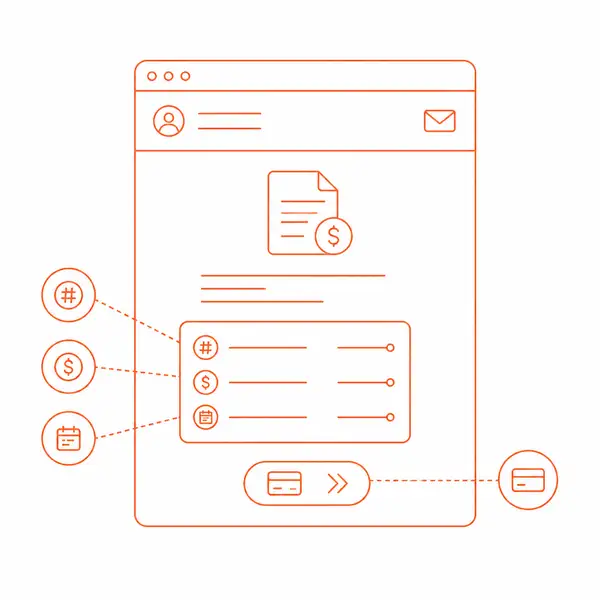
- A clear subject line with your company name and the invoice number, so the right person can find it fast.
- A polite, personal greeting using the recipient's name.
- The invoice number, so both sides can reference it instantly.
- The full amount due, stated as a clear figure.
- The original due date, which sets the context for the chase.
- An easy way to pay, ideally a direct payment link plus your bank details.
- The invoice attached, so they never have to go searching.
- A warm closing with your full contact details.
Subject lines that get opened and actioned
Your subject line is the first thing your customer sees, and it sets the tone before they read a word. Keep it under 60 characters so it shows in full on mobile, and always include the invoice number so their accounts team can locate the invoice without replying to ask. As the invoice ages, the subject line should move from neutral to clearly urgent.
| Stage | Subject line example | Why it works |
|---|---|---|
| 7 days before due | [Your business' name]: invoice 1024 | Clear and calm. Gives them time to prepare. |
| Due date | [Your business' name]: invoice 1024 | Simple and factual, not alarming. |
| 1 to 3 days late | [Your business' name]: invoice 1024 | Friendly. Assumes an oversight, not avoidance. |
| 7 days late | [Your business' name]: invoice 1024 overdue | The word "overdue" signals this is no longer a nudge. |
| 30 days late | [Your business' name]: invoice 1024 overdue | Repeating "overdue" keeps the urgency clear. |
| Final notice | [Your business' name]: invoice 1024 overdue, final notice | Short and serious. No drama needed. |
8 payment reminder email templates you can copy
The hardest part of chasing payment is knowing where to start and how to phrase each follow-up. The templates below map to the sequence above, one for each stage. Copy them, swap in your own details, and you have a full year of payment reminders ready to go. Each is written in British English, in a tone that gets you paid without burning the relationship.
Template 1: payment reminder email, 7 days before the due date
Send this about a week before the invoice is due. It is not a chase, it is a courtesy that confirms the invoice arrived and quietly puts the due date in the customer's diary. A pre-due reminder is the most underused message in credit control, and it prevents more late payments than any other.
Subject: [Your business' name]: invoice [invoice reference number]
Hi [Recipient's first name],
I hope you are well.
I just wanted to drop you a quick note to remind you that [amount owed on invoice] in respect of our invoice [invoice reference number] is due for payment on [date due].
I would be really grateful if you could confirm that everything is on track for payment. I have attached a copy of the invoice for your reference, and you can pay in a few clicks using the link below.
[Payment link]
If anything needs clarifying before then, just let me know and I will be glad to help.
Best regards,
[Sender's first name]
Template 2: payment reminder email on the due date
Send this on the day the invoice falls due. The tone stays friendly and assumes the best. You are simply making it effortless to pay today rather than later. Lead with the payment link so the customer can act in the same moment they read the email.
Subject: [Your business' name]: invoice [invoice reference number]
Hi [Recipient's first name],
I hope you are well.
I just wanted to drop you a quick note to let you know that [amount owed on invoice] in respect of our invoice [invoice reference number] is due for payment today.
You can settle it in a few clicks here: [payment link]. I have attached a copy of the invoice again in case it is helpful.
I would be really grateful if you could confirm that everything is on track for payment.
Best regards,
[Sender's first name]
Template 3: gentle first reminder, 1 to 3 days overdue
When an invoice slips a day or two past due, send a gentle first reminder. Assume an oversight, not avoidance. Your goal here is not to pressure the customer but to agree a payment date as soon as possible. Keep it short and warm so it is easy for them to reply.
Subject: [Your business' name]: invoice [invoice reference number]
Hi [Recipient's first name],
I hope you are well.
We have yet to receive payment from yourselves of [amount owed on invoice] in respect of our invoice [invoice reference number] which was due for payment on [date due].
It may well have crossed with your payment run. I would be really grateful if you could let me know when we can expect to receive payment. A copy of the invoice is attached, and you can pay here: [payment link].
Thank you very much.
Best regards,
[Sender's first name]
Template 4: second reminder, 7 days overdue
A week overdue with no reply means it is time to firm up. The message stays respectful, but the subject line now carries the word "overdue" and the body asks for payment more directly. If you charge late fees or interest, this is the point to mention it clearly. Always attach the invoice again to head off any "I never received it" reply.
Subject: [Your business' name]: invoice [invoice reference number] overdue
Hi [Recipient's first name],
I hope you are well.
We have yet to receive payment from yourselves of [amount owed on invoice] in respect of our invoice [invoice reference number] which was due for payment on [date due], and is now seven days overdue.
I would be really grateful if you could let me know when we can expect to receive payment. If there is a problem with the invoice, tell me and I will sort it out straight away. Can you please confirm receipt of this invoice? I'd like to confirm that I have your correct contact details.
I have attached a copy of the invoice once more, and you can pay here: [payment link].
Best regards,
[Sender's first name]
Template 5: payment plan offer, 14 days overdue
Two weeks overdue with silence often means the customer cannot pay the full amount right now. Rather than escalate, offer a way forward. A payment plan keeps the relationship intact and gives you a clear path to recovering the money. Many businesses skip this step and go straight to threats, which costs them both the cash and the customer.
Subject: [Your business' name]: invoice [invoice reference number] overdue
Hi [Recipient's first name],
I hope you are well.
We have yet to receive payment from yourselves of [amount owed on invoice] in respect of our invoice [invoice reference number] which was due for payment on [date due]. This invoice is now 14 days overdue, and I have not yet heard back from you.
I understand that cash flow can be tight from time to time. If it would help, I am happy to set up a short payment plan so you can clear the balance in smaller instalments. Just let me know what would work for you.
If you can settle in full instead, you can do so here: [payment link]. A copy of the invoice is attached.
Best regards,
[Sender's first name]
Template 6: first formal notice, 30 days overdue
At 30 days overdue with no payment or reply, the tone shifts from friendly to formal. This is your first formal notice. Summarise the history, restate the facts, and set a firm new date for payment. Keep it factual and free of anger; a formal email is more persuasive when it reads as calm and certain.
Subject: [Your business' name]: invoice [invoice reference number] overdue
Dear [Recipient's first name],
I am writing regarding our invoice [invoice reference number], which is now 30 days overdue. The original invoice was sent on [date sent], the due date was [date due], and the outstanding balance is [amount owed on invoice].
This invoice is now 30 days overdue and is becoming really problematic for us. Please could you let us know about when payment will be made as a matter of urgency. If you are facing difficulties, contact me today so we can agree a solution.
You can pay here: [payment link]. A copy of the invoice is attached.
Best regards,
[Sender's first name]
Template 7: second formal notice, 60 days overdue
At 60 days overdue, your second formal notice should make clear the account is now at risk of escalation. This is also the point at which UK businesses can add statutory interest and a fixed recovery charge to a commercial debt. Referencing your legal right to do so is firm, fair, and often enough to prompt payment.
Subject: [Your business' name]: invoice [invoice reference number] overdue
Dear [Recipient's first name],
We have yet to receive payment from yourselves of [amount owed on invoice] in respect of our invoice [invoice reference number] which was due for payment on [date due]. This invoice is now 60 days overdue, and despite repeated reminders the balance remains unpaid.
As this is a commercial debt, I am entitled to claim statutory interest and a fixed recovery sum under UK late payment legislation. I would much rather resolve this directly. Please make payment by [new date] to avoid further action.
You can pay here: [payment link]. A copy of the invoice and a full statement are attached.
Regards,
[Sender's first name]
Template 8: final notice before collections, 90 days overdue
A final notice is your last message before you hand the debt to a collections agency or take legal action. It should be short, formal, and unambiguous, while still giving the customer one clear opportunity to pay. Use this only when earlier reminders have genuinely failed, and keep a record of every message you have sent.
Subject: [Your business' name]: invoice [invoice reference number] overdue, final notice
Dear [Recipient's first name],
This is a final notice regarding our invoice [invoice reference number] for [amount owed on invoice], which is now 90 days overdue.
If payment is not received in full by [final date], the account will be passed to a debt collection agency and we will consider recovery through the courts, along with statutory interest and costs. I would strongly prefer to settle this with you directly.
To pay now and close the matter, use this link: [payment link]. A copy of the invoice and statement are attached.
Regards,
[Sender's first name]
How to ask for payment politely in an email
To ask for payment politely in an email, open with a warm greeting, state the invoice number and amount in plain language, and give a specific, friendly request such as "could you let me know when payment will be made?". Assume the delay was an oversight, make paying easy with a direct link, and close by offering help. Politeness and clarity are not opposites; the clearest reminders are usually the most courteous.
The phrasing that works best is collaborative, not accusatory. "I'm following up on invoice [number], which was due on [date]" lands far better than "you have not paid". If you need a deeper library of softening phrases and openers, this guide to politely asking for payment covers the wording in detail. For a quicker channel when email goes quiet, a short, friendly SMS payment reminder often gets a faster reply.
Templates for tricky payment scenarios
Not every invoice follows the standard path. Some customers pay, some part-pay, some dispute, and some promise a date and then miss it. Here are short, ready-to-use templates for the situations that fall outside the main sequence. Each keeps the relationship intact while moving the payment forward.
When the customer pays: a thank-you email
Whether payment was early, on time, or late, always acknowledge it. A short thank-you reinforces good behaviour and makes the next invoice easier to collect. It is also a natural moment to suggest a faster method such as direct debit. There is a fuller set of wording in this collection of thank you for paying emails.
Subject: [Your business' name]: invoice [invoice reference number]
Hi [Recipient's first name],
I just wanted to drop you a quick note to let you know that we have received your recent payment in respect of invoice [invoice reference number]. Thank you very much. We really appreciate it.
If you would like to make future payments even simpler, I would be happy to set up direct debit. Just let me know.
Thanks,
[Sender's first name]
When the customer makes a partial payment
Subject: [Your business' name]: invoice [invoice reference number]
Hi [Recipient's first name],
I just wanted to drop you a quick note to let you know that we have received your recent part payment in respect of invoice [invoice reference number]. Thank you very much. The remaining balance is [remaining amount].
I would be really grateful if you could let me know when the rest will follow. You can pay the balance here: [payment link]. Do tell me if a short plan for the remainder would help.
Best regards,
[Sender's first name]
When the customer raises a query or dispute
Subject: [Your business' name]: invoice [invoice reference number]
Hi [Recipient's first name],
Thank you for flagging this. I want to make sure our invoice [invoice reference number] is correct, so I am looking into the point you raised and will come back to you by [date].
If you can share any detail that helps me resolve it faster, please do. I appreciate your patience.
Best regards,
[Sender's first name]
When a promised payment date is missed
Subject: [Your business' name]: invoice [invoice reference number] overdue
Hi [Recipient's first name],
I hope you are well.
I am following up on our invoice [invoice reference number]. We had agreed payment would reach us by [promised date], and it has not yet come through.
I appreciate things come up. I would be really grateful if you could confirm a firm new date, or let me know if something is holding it up so I can help. You can pay here: [payment link].
Best regards,
[Sender's first name]
Best practices for payment follow up that gets results
The templates do the heavy lifting, but a few habits make every payment reminder land better. Follow these and you will collect faster while keeping customers on side.
- Be consistent. A predictable sequence trains customers to expect, and act on, your reminders.
- Stay warm until you cannot. Empathy diffuses tension and keeps the door open; save firmness for when it is earned.
- Make paying effortless. A direct link and multiple payment methods remove the friction that causes delay.
- Personalise, even with automation. Using the customer's name and exact invoice detail lifts response rates.
- Keep clear records. Log every reminder so you always know what was sent and when, especially if you escalate. If you track invoices in a spreadsheet, a free payment tracker template shows each balance and how many days it is overdue.
- Pick up the phone. When email goes quiet, a friendly call often resolves things faster than another message.
How to prevent late payment in the first place
The best payment reminder is the one you never have to send. Most late payment traces back to three avoidable causes: unclear terms, invoices that are easy to overlook, and no simple way to pay. Agree payment terms in writing before work begins, state them on every invoice, send the invoice the moment the work is done, and always include a payment link. A pre-due reminder then closes the gap. Businesses that follow up proactively on the great majority of their invoices are far more likely to be paid within a week of the due date.
Can you charge interest on late payment in the UK?
Yes. Under the Late Payment of Commercial Debts (Interest) Act 1998, UK businesses can charge statutory interest on overdue commercial invoices at 8% above the Bank of England base rate, plus a fixed sum to cover recovery costs. You can also claim this even if your contract is silent on late payment. Knowing your rights makes your formal reminders far more credible.
The fixed compensation depends on the size of the debt, and is set out in the UK government guidance on late commercial payments. If no payment terms are agreed, the law sets a default of 30 days. As a worked example from that guidance, a £10,000 GBP invoice paid 60 days late would accrue roughly £293 GBP in interest and compensation.
| Size of the unpaid debt | Fixed sum you can claim |
|---|---|
| Up to £999.99 GBP | £40 GBP |
| £1,000 to £9,999.99 GBP | £70 GBP |
| £10,000 GBP or more | £100 GBP |
Source: GOV.UK, late commercial payments: charging interest and debt recovery. The UK government has also announced stronger late payment rules, so check the latest position before relying on interest in a formal notice.
How to automate your payment reminders with Chaser
Running this whole sequence by hand across dozens of invoices is where things fall through the cracks. Chaser automates the entire payment reminder schedule, sending the right message at the right time based on each invoice's status, while still sounding like you. Instead of generic, robotic nudges, you set up cadences that recover cash and protect the relationship.
- Send at scale, in your voice. Personalised email, SMS, and call reminders go out automatically on your chosen schedule.
- Segment by behaviour. Reliable payers stay on a soft-touch track; persistent late payers move through a firmer, multi-channel cadence.
- Never chase a paid invoice. A two-way sync with accounting tools such as Xero, QuickBooks, and Sage reconciles payments in real time.
- See what works. Track days sales outstanding, average days to pay, and reminder response rates in one place.
The result is a system that reclaims hours every week and helps you get paid faster, without burning a single client bridge. You can see how it fits your team on Chaser, compare options on Chaser pricing, or start a free trial and run your first automated sequence this week.
If a reminder alone does not move things, a statement of account gives the customer the full picture of what is outstanding.
Frequently asked questions
How do I ask for payment politely in an email?
Open with a warm greeting, state the invoice number, amount, and due date clearly, then make a specific request such as "could you let me know when payment will be made?". Assume the delay was an oversight, attach the invoice, include a payment link, and close by offering help.
How do I chase a client for payment without damaging the relationship?
Use a consistent, timed sequence and keep the tone collaborative. Start gently when an invoice is a few days late, reference the invoice rather than blaming the person, and offer a payment plan if money is tight. Firmness is earned over time, not used at the first reminder.
What is the correct payment follow up email format?
A payment follow up email needs a clear subject line with your company name and invoice number, a polite greeting, the invoice number, amount, and due date, an easy way to pay, the invoice attached, and a warm closing with your contact details. Keep the whole message short and scannable.
How many payment reminders should I send before escalating?
Most businesses send a pre-due reminder, a due-date prompt, and two or three overdue reminders before moving to a formal notice at around 30 days. Tailor the number to your relationship with the customer and the value of the invoice, but always escalate in clear, predictable steps.
What should a final reminder for payment say?
A final reminder for payment should be short and formal. State the invoice number, amount, and how overdue it is, give one clear deadline to pay, and explain what happens next if payment is missed, such as collections or court action. Keep a record of every reminder you have sent.
When is the best time to send a payment reminder email?
Mid-morning on a weekday tends to work best, as it lands when accounts teams are processing their inbox and payment runs. Avoid late Friday and Monday morning. Sending a pre-due reminder about a week ahead of the due date is more effective than waiting until the invoice is already overdue.
Can I charge interest on a late invoice in the UK?
Yes. UK businesses can charge statutory interest on overdue commercial invoices at 8% above the Bank of England base rate, plus a fixed recovery sum of £40, £70, or £100 GBP depending on the debt size, under the Late Payment of Commercial Debts (Interest) Act 1998. This applies even if your contract does not mention it.
Can automated payment reminders still feel personal?
Yes. Tools like Chaser merge each customer's name and invoice detail into reminders and let you set the tone for each stage, so automated messages read as if you wrote them by hand. You keep the warmth and consistency while saving the hours that manual chasing would cost.
Stop chasing invoices by hand and get paid faster
Chaser runs your entire payment reminder sequence automatically, recovers cash sooner, and protects the customer relationships you have worked hard to build. See what it could do for your cash flow.
Sources: GOV.UK late payments consultation, GOV.UK late commercial payments guidance, Late Payment of Commercial Debts (Interest) Act 1998, GOV.UK 2026 late payment reforms, Intuit, Sage, CFO.com.

%20-%20Reduce%20DSO.webp)